The situation
Most podcasts live entirely on someone else’s platform. That works until the show wants to book a guest, bring on a partner, or point an audience somewhere it controls. Then a link to an episode feed is not enough, because it says nothing about what the show is or who makes it.
What we built
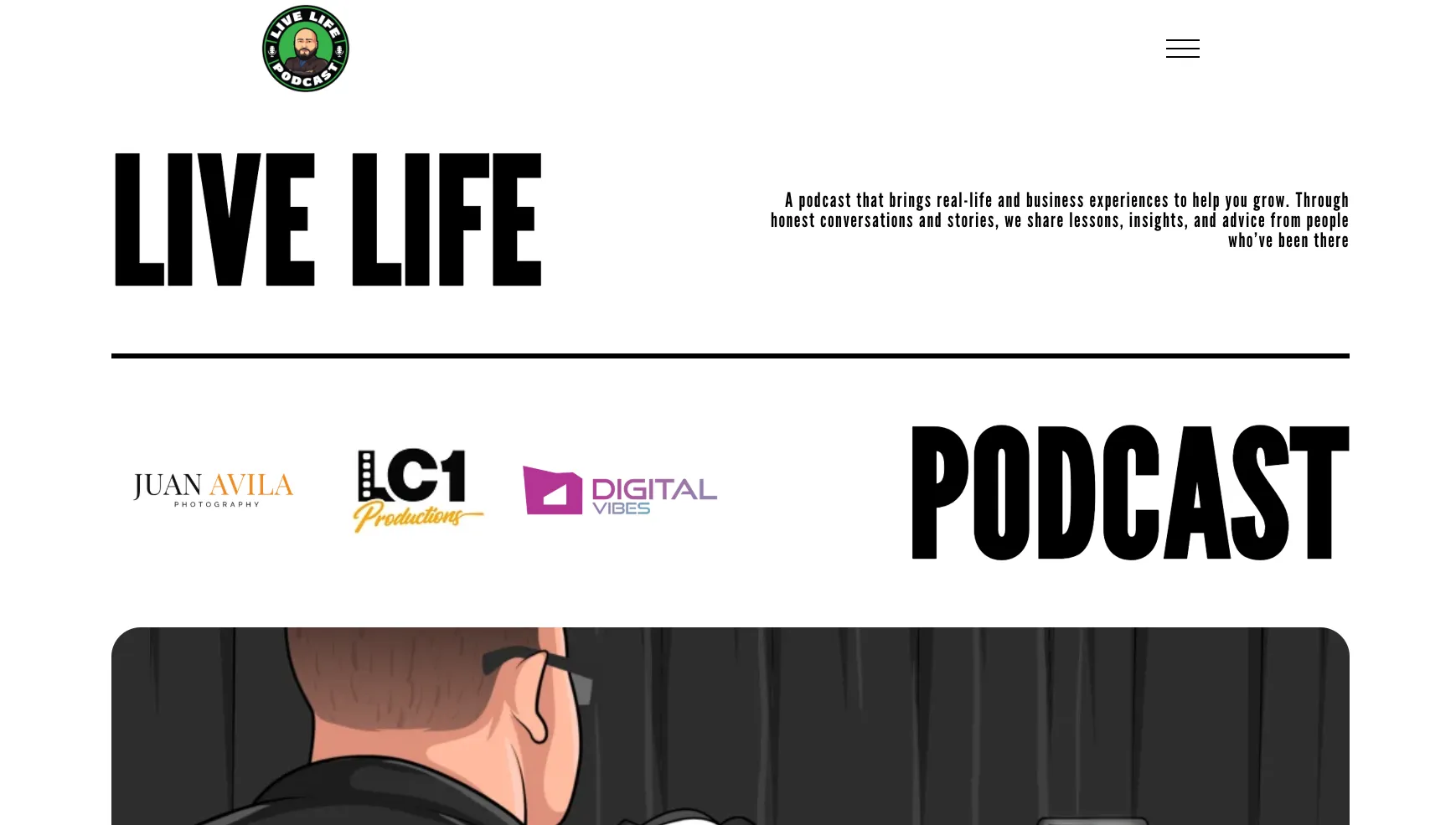
A page that establishes the show in one screen.
- The wordmark set oversized and split across the layout, so the name is the design rather than a logo sitting above a template
- The premise stated once and honestly: real life and business experience, honest conversations, lessons from people who have been there. No claims about audience size
- Partner and production credits shown as logos in the same band as the show name, which is how a podcast signals it is a real production rather than a phone in a bedroom
- The illustrated host carried through from the show art, so the site and the episode thumbnails read as one thing
- Type doing the heavy lifting. A condensed display face at scale, near-black on white, no gradients, matching a show that is two people talking
What it does now
A prospective guest or partner can tell what the show is and who makes it without leaving the first screen.