The situation
Quoting a roof means someone drives out, gets on the roof, measures it, comes back and works out materials. That is a half day before the homeowner has a number, and it is a half day spent on jobs that will not close.
Then there is the second half of the problem, which is worse because it is invisible. Turning measurements into a materials order means knowing squares, waste factor, bundle coverage and which products the crew runs. Get the waste factor wrong on a cut-up roof and the job eats its own margin.
What we built
An address in, a materials list out.
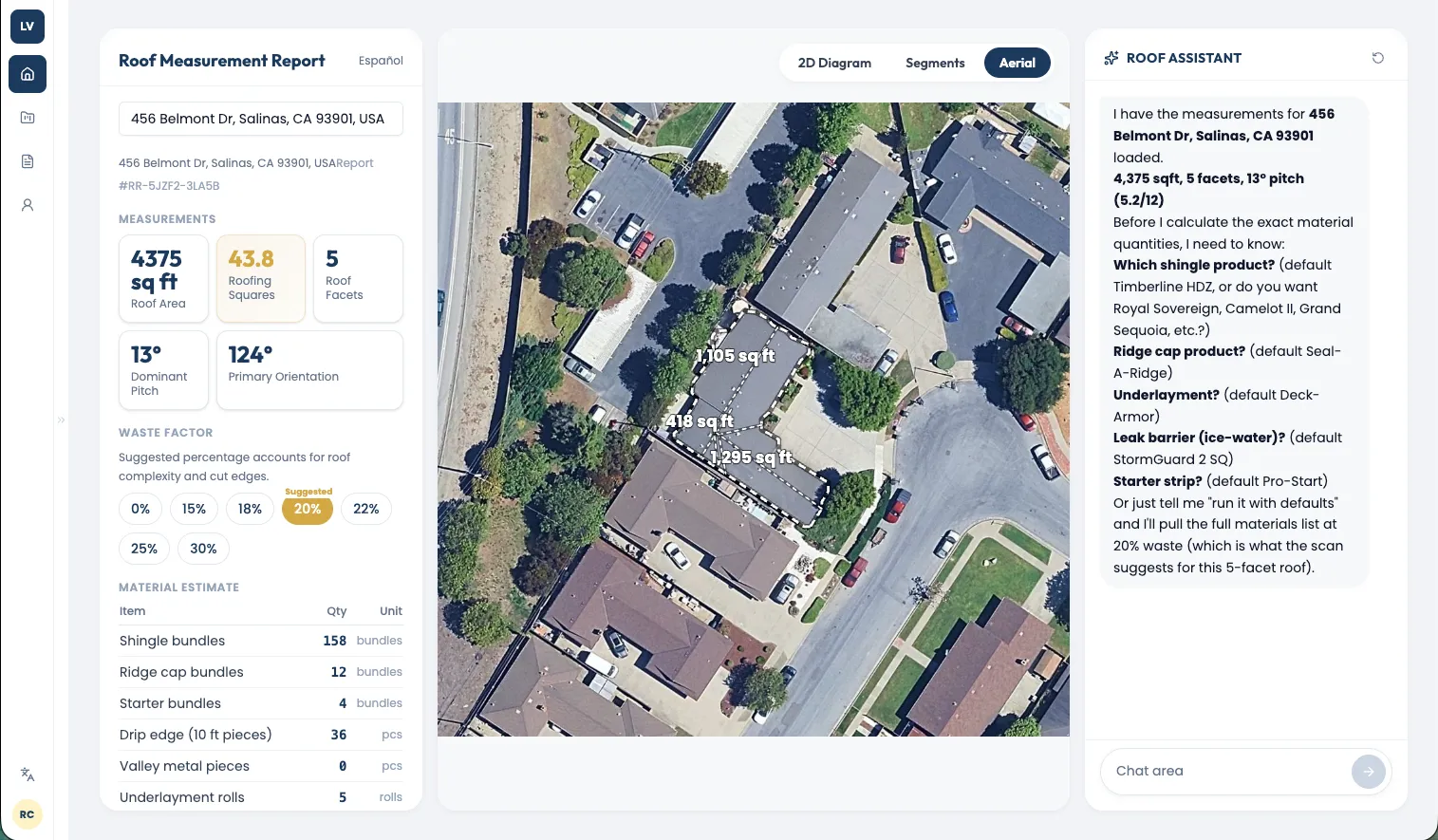
- Roof measurement from aerial imagery through Google Maps Platform, with machine learning finding the facets rather than a person tracing them
- The numbers a roofer actually works from: total area, roofing squares, facet count, dominant pitch and primary orientation
- Every facet outlined and labeled with its own square footage, viewable as a 2D diagram, as segments, or over the aerial
- A waste factor selector from 0 to 30 percent with a suggested figure derived from the roof’s own complexity, so a five-facet cut-up roof is not estimated like a simple gable
- A material estimate that comes out as an order: shingle bundles, ridge cap, starter, drip edge, valley metal, underlayment rolls
- A shareable report number on every scan
- Full English and Spanish
The roof assistant
An assistant that loads the scan and then asks the questions an estimator would ask: which shingle line, which ridge cap, which underlayment, which leak barrier, which starter strip. It carries sensible defaults for each and will run the whole list on defaults if you tell it to. It explains its own reasoning, including why it is suggesting a particular waste factor for that specific roof.
What it does now
A contractor prices a roof from the office in the time it used to take to load the truck, and the materials list comes out the far end already reconciled with the measurements.