The situation
Selling CRM software to a local business owner means selling to someone who has already bought one. They imported their contacts, used it for three weeks, could not get the automation to work, and now pay for it out of guilt.
So the objection is never “what does it do.” It is “how long until I give up on this one, and what will it cost me by then.” A features grid answers neither.
What we built
A site that names the objection in the headline and keeps answering it.
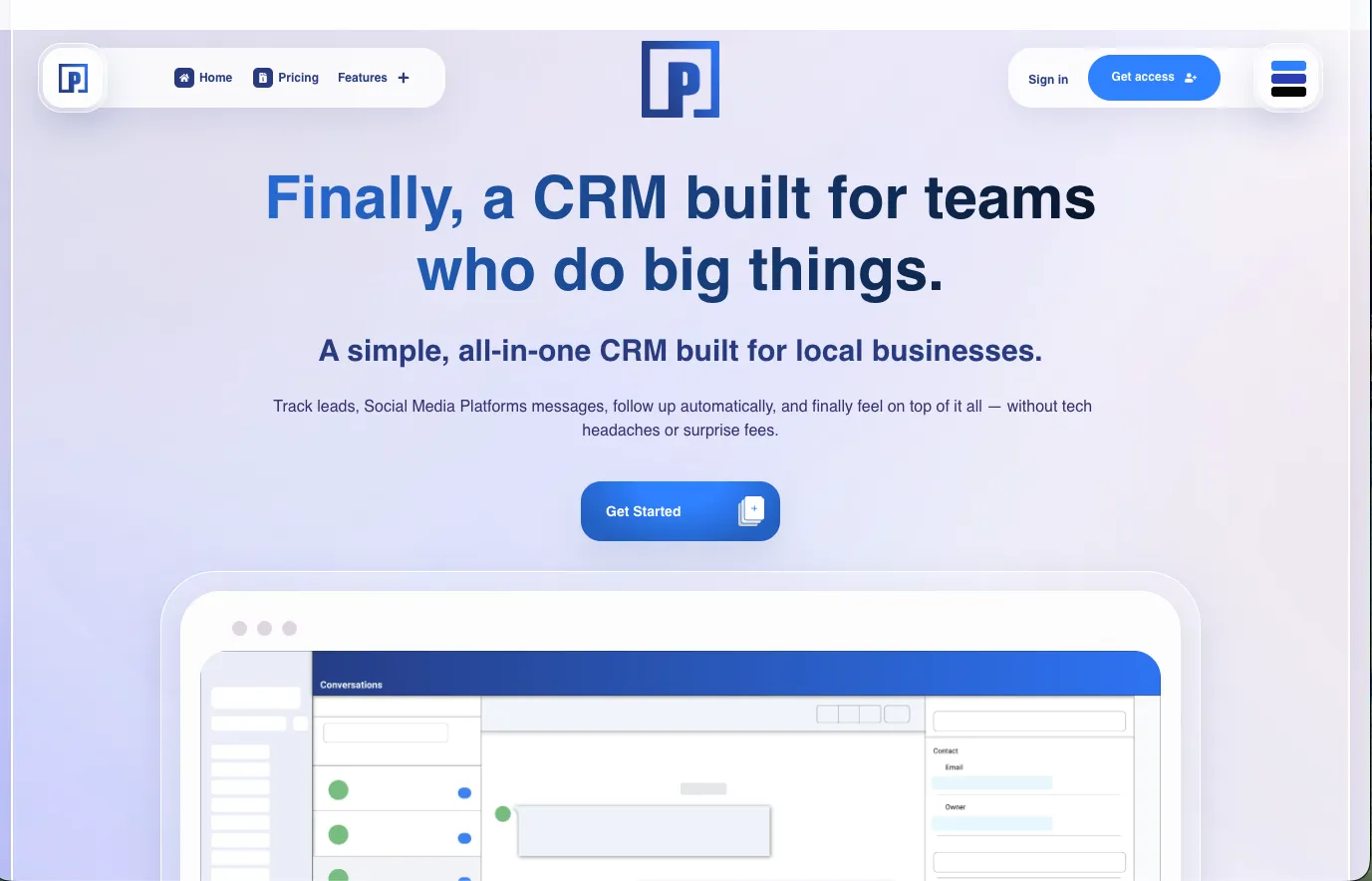
- The category and the audience stated in one line under the headline: a simple, all-in-one CRM built for local businesses. No one wonders what they are looking at
- Both real objections handled in the same sentence as the capabilities, without tech headaches or surprise fees, because listing capabilities alone reads like every tool that already disappointed this buyer
- Simple and all-in-one carried together on purpose. Those pull in opposite directions and the promise only works if it holds both
- The product shown, not described: a real interface in a device frame, with the conversations inbox and a contact record visible, so the buyer can see what using it looks like
- Pricing in the top navigation rather than at the bottom of the page, which is the honest move for a product whose pitch is no surprise fees
- Get access and Sign in separated in the header, so an existing customer is not competing with a new one for the same button
- One primary action on the page, Get Started, instead of three ways in
What it does now
An owner who has already quit one CRM gets told, in the first two lines, why this one is different on the two axes they actually care about, and can check the pricing claim before they scroll.